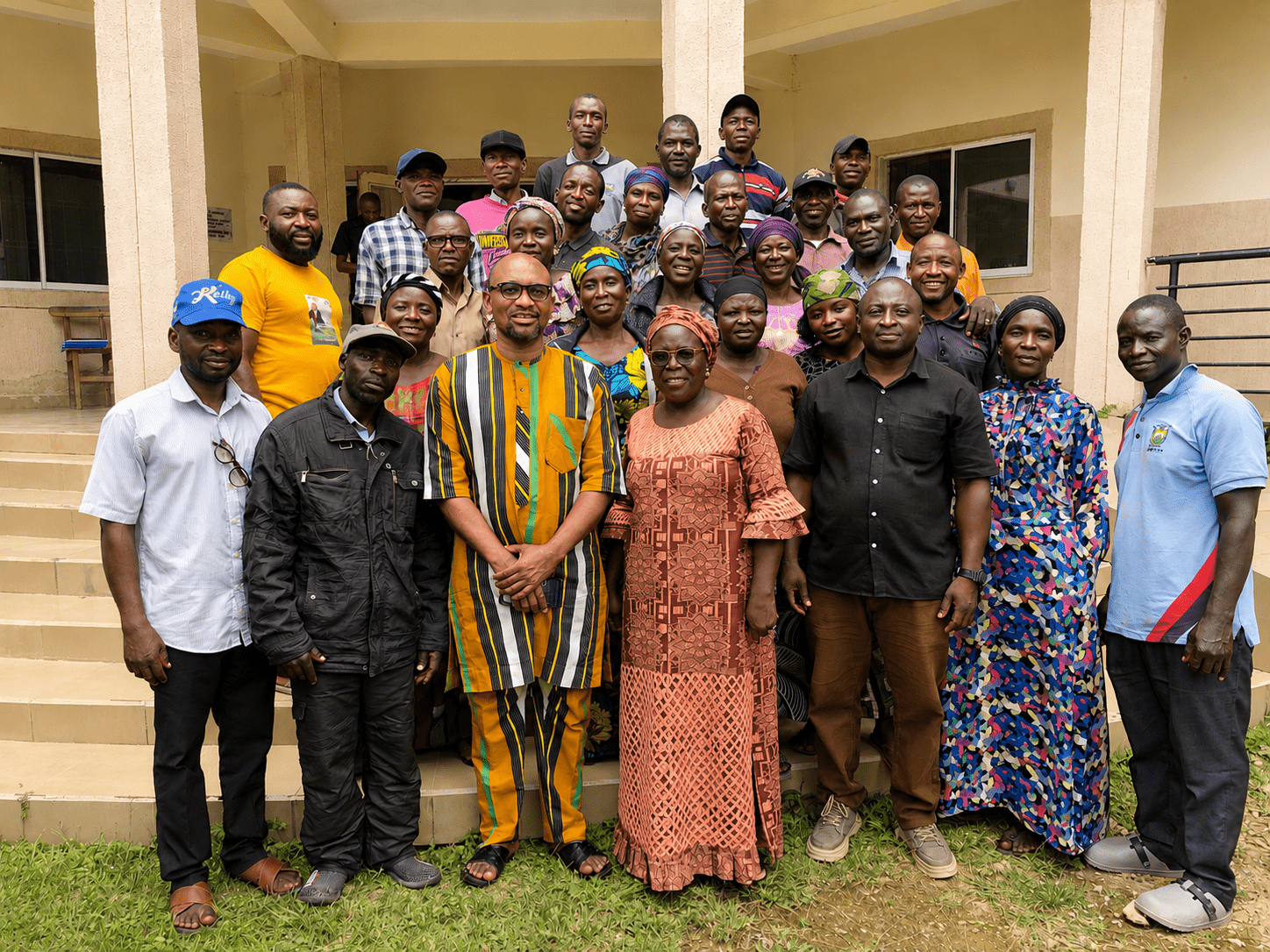
The Works Department recently held a workshop on the 12th of August, 2026, organized by the Director of Works, bringing staff together for a time of learning and reflection on Understanding Roles, Responsibilities, Job Descriptions, Work Planning, and Eliminating Redundancy in the department, as well as Professional Ethics, Christian Stewardship, and Workplace Conduct. The sessions were facilitated by Associate Prof. Rahila Jakawa, Dean of Academics, and Rev. Dr. Alex Dusu, the Registrar of the institution, and closed with a discussion on Building a Culture of Accountability, Teamwork, and Productivity.
Associate Prof. Jakawa opened her session on Professional Ethics by grounding the discussion in scripture, drawing from Colossians 3:23-24, which calls believers to work as though working for the Lord and not for man, from 1 Corinthians 4:2, on the requirement of faithfulness in stewardship, and from Matthew 5:16, on letting one’s light shine through good works. From these texts, she emphasized the need for every staff member to do their work diligently, noting that every worker contributes to the ministry of the institution. Roles may differ from one department or office to another, but the calling and the contribution each person makes toward building the institution remain equally significant.
One of the most memorable points from her session was a reflection on legacy and character. She observed that while it is easy for people to forget a name, it is far more difficult for them to forget how someone lived and how they treated others, a reminder that students and colleagues alike are always watching how the Works Department staff conduct themselves, not just what they say. Building on this, she asked staff to consider how they resolve conflict and how they demonstrate Christian character in their daily interactions, both with one another and with the wider community they serve.
She described character and competence as the twin pillars of effective service, explaining that doing excellent work requires both spiritual and professional maturity. Professional ethics, she said, are the principles that guide how one serves: rules are followed not merely out of obligation, but because of a conviction rooted in Christ. She challenged staff to regularly ask themselves whether their work reflects Christ, to serve without demanding recognition, to be faithful with every responsibility entrusted to them, and to be honest in their words and their reports. Self-discipline and respect were highlighted as essential values, treating everyone with dignity because all are made in the image of God. As she put it, ethics builds trust, and trust strengthens relationships.
The discussion on Biblical Stewardship followed naturally from this foundation. Associate Prof. Jakawa reminded staff that God entrusts each person with the work placed in their hands, and that every opportunity should be used to make a positive difference. Faithful stewardship, she said, ensures punctuality and productivity, and staff were encouraged to work deliberately against procrastination. She reminded the gathering that God’s resources should be handled with care, and that how staff relate to one another should reflect the values of believers. Perhaps most strikingly, she noted that God has enough resources for everybody, so there is no need for competition among staff. Instead, colleagues should encourage one another rather than attempt to bring each other down.
Rev. Dr. Alex Dusu, the Registrar, closed the day with a session on Building a Culture of Accountability, Teamwork, and Productivity, focused on helping staff understand their roles within the Works Department. Drawing from 1 Timothy 4:12, he spoke on the importance of being accountable for the tasks assigned to each staff member. He drew a helpful distinction between one’s “roll” in the organisation, meaning the function one plays, such as a driver, and one’s “responsibility,” which is defined by the specific job description attached to that role. This distinction offered staff a clearer lens through which to view their day-to-day duties and how those duties fit into the larger work of the institution.
Altogether, the workshop offered the Works Department more than a review of job functions. It was an invitation to see everyday work as an act of worship, to lead with character before competence, and to build a culture where accountability and encouragement go hand in hand.